Birds are fun to watch, bring joy with their beautiful songs and add biodiversity to your garden. And inviting more birds into your outdoor space is easier than you think! More and more eco-conscious garden enthusiasts are seeking natural, sustainable ways to boost biodiversity—starting with their own backyard. If you want to learn how to attract birds to your garden using timeless tips and eco-friendly methods, this blog is for you.
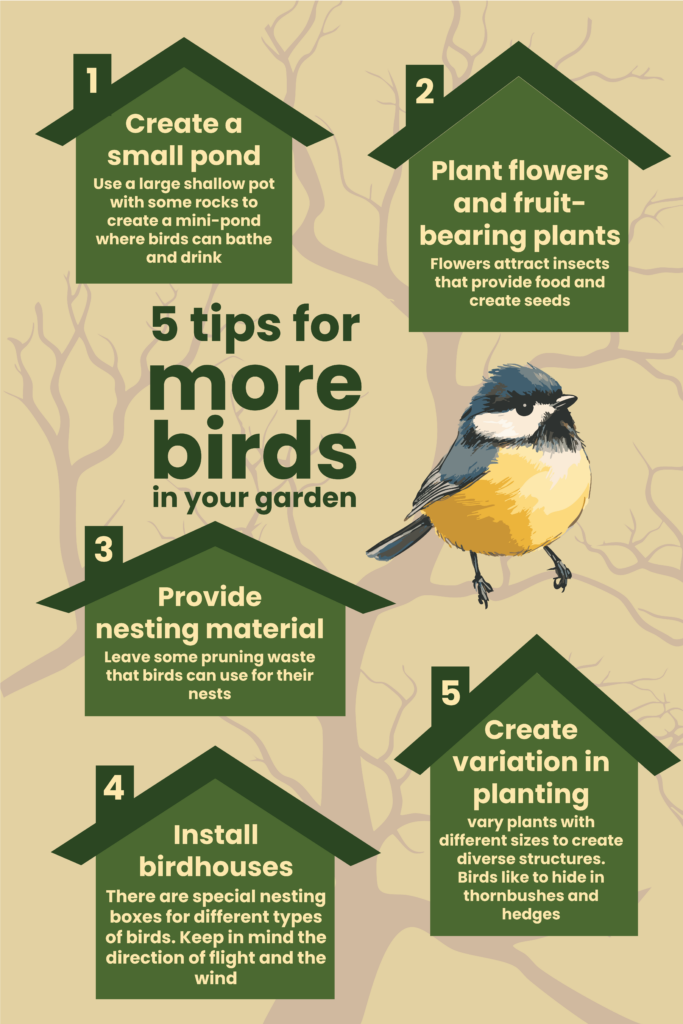
In this blog, accompanied by a beautifully illustrated infographic, you’ll find five simple, effective ways to turn your garden into a welcoming haven for birds. Whether you have a compact city garden or a large country-side garden, these steps are easy to follow and beautifully compatible with vintage-inspired garden styles.
1. Add a pond or water source
A reliable source of clean water is essential if you want birds to visit your garden regularly. Birds drink, bathe, and even cool off using water sources—making this an important element in a bird-friendly garden. An advantage is that water also attracts other animals, like frogs and toads, that can in turn help you to remove slugs and snails. Sounds like a win-win!
Choosing the right water feature
You don’t need an elaborate pond. A shallow bowl, a ceramic birdbath, or a vintage stone basin can work wonders. The key is to keep the water fresh and easily accessible. Place it in a semi-shaded spot so it doesn’t heat up too quickly in summer.
Keep it clean and safe
Birds are picky about cleanliness. Regularly change the water and remove algae to prevent bacteria and mosquito larvae. In winter, you can add a floating ball to keep it from freezing. You can also break ice manually when you are on your garden-inspection round.
Blend function with aesthetic
Want to stay in style? Use aged ceramic, kitchenware, or retro basins to blend the water source with your vintage-inspired garden elements. Birds won’t mind the look, but your guests might appreciate the charm.
2. Grow bird-friendly plants
Creating a lush and layered plant environment attracts birds by offering shelter, food, and nesting opportunities. Plants are your best allies in building a self-sustaining bird paradise.
Use native plants for best results
Native plants are better suited for local insects and birds. Look for berry-producing shrubs. In lowland Europe these are for instance Elderberry (Sambucus nigra), Hawthorn (Crataegus), and Mountain Ash (Sorbus aucuparia). These provide both fruit and shelter throughout the seasons.
Attract insects naturally
Avoid pesticides and let your garden host a healthy population of insects. Birds like robins, sparrows and wrens rely on grubs and bugs as primary food sources—especially during nesting season. Pesticides not only kill insects, but also accumulate in the food-chain.
Include Seasonal Variety
Diversity is crucial. Choose plants that bloom and fruit at different times of the year. This ensures food availability across the seasons and keeps your garden vibrant all year round. Keep this in mind when you re-structure your garden or want to add more plants. You can make an overview when specific plants flower and when they bear fruit to see if your plants provide available food throughout the seasons.
3. Offer natural nesting material
During spring and early summer, birds need materials to build sturdy, safe nests. By supplying the right items, you’ll encourage them to settle in your garden and raise their young nearby.
What to provide?
Stick to natural materials like dried grass, twigs, straw, feathers, or pet fur (if chemical-free). You can collect and pile them in a small open basket or stuff them into hanging mesh bags or hollow twigs. By leaving pruning material on the ground or placing it on a designated pile in your garden, you provide sufficient supply for the birds. An added advantage is that a pile of branches might also attract hedgehogs, which adds to even more biodiversity!
Avoid synthetic materials
Never offer plastic string, synthetic yarn, or dryer lint. These may harm birds or their chicks. Keep it natural, soft, and lightweight so birds can easily carry it.
4. Install birdhouses
Safe nesting spaces are harder to come by as natural tree cavities disappear. Birdhouses, also called nest boxes, provide vital shelter and breeding areas for many species.
Choose the right type
Not all birdhouses are the same. Tailor your box to your local species—some prefer small holes, while others need open-front designs. Check local wildlife guides for species-specific advice.
Where and how to hang them
Place birdhouses in quiet, shaded areas, away from foot traffic. Avoid hanging them directly in the sun or where predators like cats can easily reach. Choose an orientation with the least wind and without obstacles in front of the opening. Birds do not like to live in crowded areas and they have their own territory, so avoid too many boxes close to each other. Use sturdy hooks or tree-friendly mounting methods.
5. Create variation in planting height and texture
Birds are drawn to gardens that mimic wild, layered ecosystems. A variety of plant heights and textures helps birds find food, protection, and nesting spaces.
Layer your landscape
Combine tall trees, mid-height shrubs, climbing vines, and low ground covers. This allows birds to move vertically, hide from predators, and choose from different microhabitats.
Leave room for “messy” spots
Birds appreciate areas that look a bit wild. Leave a patch of brambles, tall grasses, or a log pile. These spaces provide insects and hidden shelter that birds adore. They can also use materials from this pile for nesting material.
Design for beauty and biodiversity
With a mix of evergreens, flowering shrubs, and fruit-bearing plants, you create a space that’s both attractive and ecologically rich. Think of it as a garden that hums with life—visually appealing and full of singing birds and buzzing insects.
The charm of a vintage garden with birds
Attracting birds to your garden doesn’t require a complete redesign—just a thoughtful approach rooted in biodiversity. By blending vintage garden elements like reclaimed materials, aged planters, and rustic feeders with ecologically smart choices, you can build a garden that’s as functional as it is beautiful. Looking for more inspiration? Browse our vintage gardening collection on Redbubble for unique garden-themed illustrations and home accessories that match your nature-loving lifestyle.
Explore eco-Friendly garden designs
Celebrate the magic of nature with original, sustainable designs made for green thumbs and wild hearts. Whether you’re looking for gifts, home decor, or inspiration, you’ll find a curated selection that reflects your love for gardening and the planet.
Let your garden take flight
Creating a bird-friendly garden is not only a joy to watch—it’s a way to support local ecosystems and reconnect with nature. With these five simple tips, you’ll have birds nesting, feeding, and singing in your garden in no time. And in the process, you’ll create a more balanced, peaceful, and beautiful outdoor space—just the way nature intended.